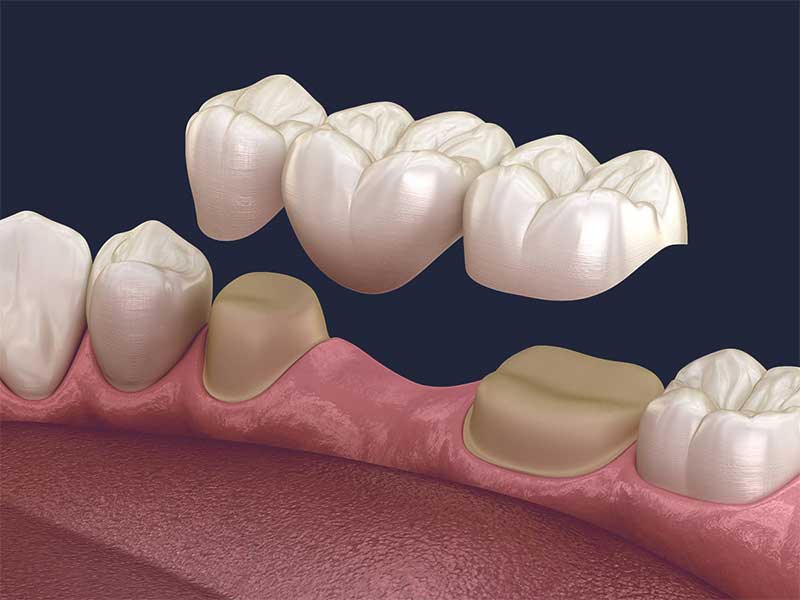
A traditional dental bridge consists of 3 to 4 consecutive crowns. To be suitable for traditional bridges, you need to have healthy teeth at each end of the gap, even dental implants. Why? Because your dentist bonds the crowns or dental implant on both ends of the teeth. So if the dental bridge consists of 4 crowns, then two of them will replace the gaps in the middle. However, the last and the first will be bonded onto the adjacent teeth or implants. Traditional dental bridges are most suitable for the back teeth.
The Maryland dental bridge comes in the form of a tooth with wing-like metals on both sides. The Maryland bridge replaces a gap and holds its anchor by bonding the wings behind the adjacent teeth. Similar to the traditional dental bridge, you need to have teeth or dental implants on both sides of the gap.
The Maryland bridge is best for the front teeth that are visible when you smile. This is because they do not have enough strength for the pressure on molars.
The cantilever bridge structure comes in the form of a tooth attached to a dental crown. The tooth replaces a missing gap and gains support by bonding the adjacent crown onto the neighboring tooth or dental implant.
The cantilever dental bridge is best for canine teeth or teeth near the canines. They are suitable only if a single tooth is missing.